
- By Ajeet Kumar
- Mon, 13 Apr 2026 01:03 PM (IST)
- Source:JND
- Strait of Hormuz blocked, impacting 20% global oil flow.
- US-Iran peace talks failed, escalating military confrontation risk.
- Trump's U-turn: US to block Hormuz, pressure allies.
The Strait of Hormuz, a critical chokepoint that delivers 20 per cent of the world’s oil flow — especially to Asian giants that rely heavily on this sea route for their energy needs — has been blocked ever since the Iran war broke out on February 28. Since then, the US has issued hundreds of warnings to open the narrow passage amid intense pressure from its allies, as soaring crude prices have already shut down millions of businesses and put major world economies at stake.
Trump's ultimatum to open Hormuz
US President Donald Trump, through a social media post, fired shots at Iran, saying he would wipe out Iranian civilisation if it failed to open the Hormuz region. He even used expletive language to issue an ultimatum to Tehran. However, the passage remains blocked, except for a few ships. On Saturday, the US-Iran war suffered another setback when the peace talks between both countries failed in Pakistan.
How Trump has suddenly shifted plans from opening Hormuz to blocking it
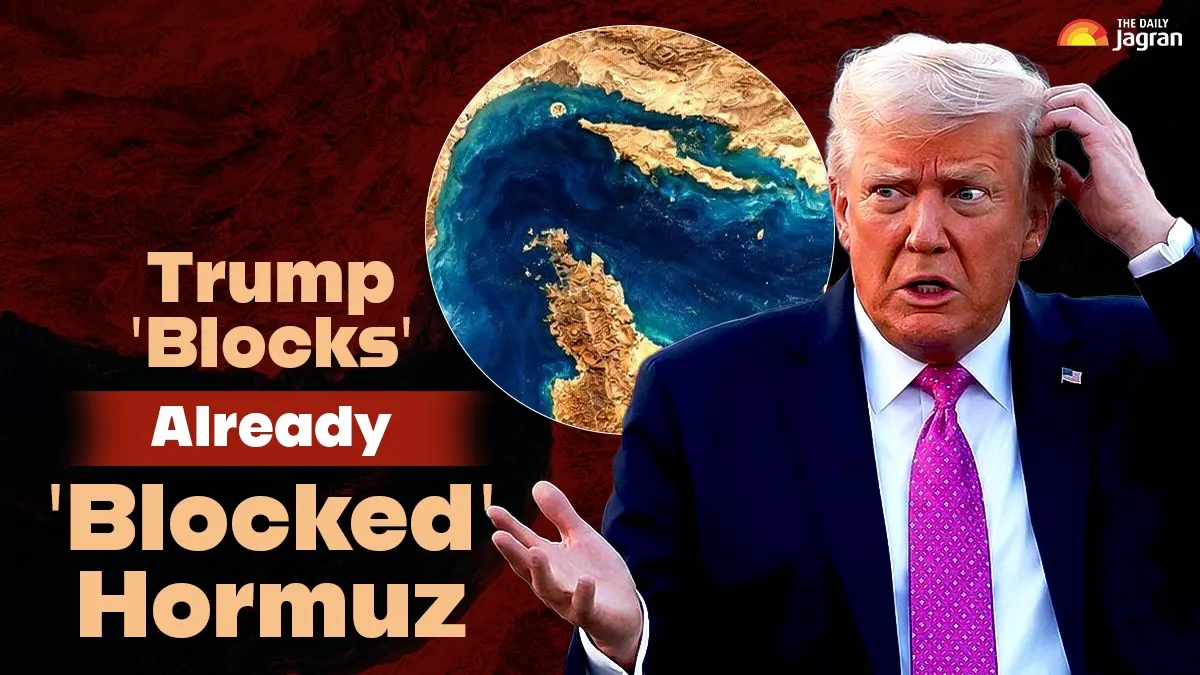
This triggered Trump to took a complete U-turn by saying the American Navy will block the “already blocked” Strait of Hormuz in order to open it. Though it sounds bizarre, this could be US President's latest tactics to put pressure on American’s allies, especially NATO countries, which he claimed have given billions of dollars since NATO's inception in 1949.
He said US forces would not only block every vessel from entering or exiting the region but would also intercept every vessel in international waters that had paid a toll to Iran. “No one who pays an illegal toll will have safe passage on the high seas,” Trump wrote on social media, adding: “Any Iranian who fires at us, or at peaceful vessels, will be blown to hell!”
He added that the US Navy will begin destroying mines that the Iranians had dropped in the Strait of Hormuz, a chokepoint for about 20 per cent of global energy supplies. This means no ships can either enter or exit the Hormuz region.
Why does Hormuz crisis deepen further?
This came after 21 hours of marathon negotiations with Iran yielded no results in Pakistan under the banner of the “Islamabad Talks 2026” on Saturday, where US Vice President JD Vance and two others had claimed to negotiate in “good faith” with Tehran. What makes this moment particularly volatile is the emergence of a “counter-blockade” dynamic, in which both sides are effectively trying to control the same chokepoint, raising the risk of direct confrontation.
At the core of the crisis is leverage. Iran had already signalled its intent to assert control over the strait, even proposing transit fees on oil shipments — an idea Washington branded as “world extortion.”
What happens if the fragile Iran-US ceasefire collapses?
If the Iran-US ceasefire formally collapses, three immediate consequences are likely.
First, a military flashpoint becomes inevitable. Iran's Revolutionary Guards (IRGC) have already warned that any enforcement of the blockade would be treated as an act of war. With US naval forces preparing to intercept vessels and clear alleged sea mines, even a minor miscalculation, such as boarding a tanker or an accidental exchange of fire, could spiral into a direct naval conflict.
ALSO READ: Why Hormuz Blockade Leaves India Caught Between Energy Needs And Geopolitical Risks | 5 Points
Second, global energy markets will face severe disruption. The Strait of Hormuz typically handles around 20 per cent of global oil shipments. Even before the new blockade begins, tankers are rerouting or avoiding the region entirely, signalling panic in shipping markets. A prolonged standoff could send oil prices soaring, triggering inflationary shocks worldwide, especially in energy-dependent economies like India.
Third, the conflict risks widening geographically. Allies and regional players may be pulled in, either to secure shipping lanes or to back one side diplomatically or militarily. There are already discussions about multinational involvement to ensure safe passage, indicating that the crisis could evolve beyond a bilateral US-Iran standoff.