
- By Akansha Pandey
- Sun, 12 Apr 2026 02:40 PM (IST)
- Source:JND
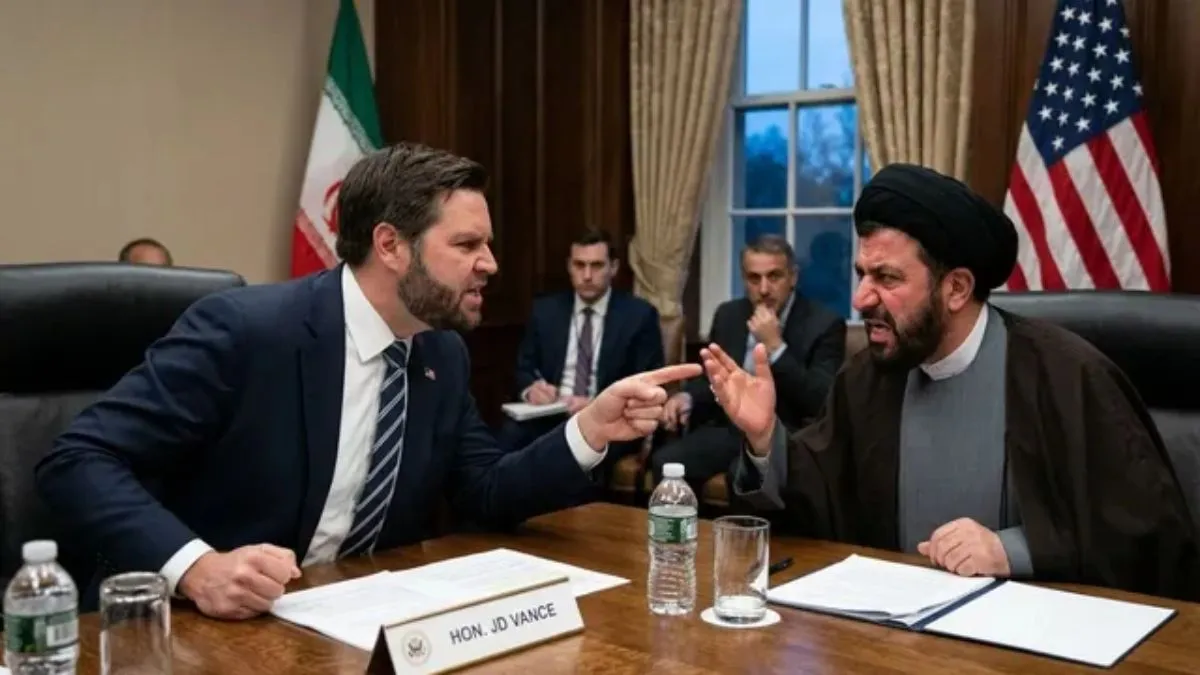
The US and Iran peace talks in Islamabad concluded without any sollution on Sunday as the talk over without reaching a ceasefire agreement, accourding to the US Vise President JD Vance. The peace talk lasts for nearly 21-hours of overnight negotiations mediated by Pakistan's Prime Minister Shehbaz Sharif and Field Marshal Asim Munir, the attempt to end the conflict erupted on February 28 remaines stalled.
"The bad news is that we have not reached an agreement, and I think that's bad news for Iran much more than it's bad news for the United States of America," Vice President JD Vance, the head of the US delegation, told Reuters shortly before he left Islamabad.
5 Key Reasons Behind US-Iran Peace Talks Collapsed
The failure of the Islamabad summit has dampened hopes for an immediate end to the Middle East war. Here are the five primary points of contention that led to the stalemate:
ALSO READ: How The Crucial Strait Of Hormuz Has A Link With Himalayas | Explained
1. Atomic Energy Deadlock
One of the major hurdle in peace talk failure was the US demand for ironclad guarantees that Iran would not develop nuclear weapons. US pushed for strict limitations on uranium enrichment and technical equipment, but Iran rejected these terms viewing them as an infringement on its national sovereignty.
2. Dispute Over Frozen Capital
Iran insisted that any truce must involve the immediate release of its frozen assets currently held in Qatar and other international banks. US negotiators refused to grant these economic concessions as part of the initial ceasefire terms.
3. Control Of Strait of Hormuz
Tensions flared over the Strait of Hormuz. Iran sought greater authority over the waterway, including the right to collect transit fees. Conversely, the US remained firm on ensuring the strait stays open for unrestricted global trade and shipping.
4. Expanded Scope Of Demands
The negotiations grew complicated when Iran expanded its list of requirements, demanding war reparations and a comprehensive ceasefire that extends across the region, including Lebanon. The US, however, wanted to keep the focus strictly on nuclear restrictions and maritime safety.
5. Persistent Mutual Distrust
The talks were overshadowed by a deep lack of confidence between the two nations. Both sides accused the other of being uncompromising, leading to a breakdown in communication. With these fundamental differences remaining, the prospect of a ceasefire remains fragile.
While Vance noted that "substantive discussions" took place, he emphasised that the failure to reach a deal was a significant missed opportunity for Tehran. Meanwhile, Iran's foreign ministry suggested they are in no rush to settle, indicating that their military operations will proceed.
"Excessive" US Demands Had Hindered Agreement
According to Iranian media, Tasnim news agency cited "excessive" US demands had hindered reaching an agreement. Other Iranian media cited that there was agreement on a numbers of issues but the Strait of Hormuz and Iran's nuclear programme were the main points of difference.
A spokesperson for Iran's foreign ministry said the talks were conducted in an atmosphere of mistrust. "It is natural that we shouldn't have expected to reach agreement in just one session," the spokesperson was quoted as saying by Iranian media.
You May Also Like To Watch