
- By Nidhi Giri
- Sun, 12 Apr 2026 12:33 PM (IST)
- Source:JND
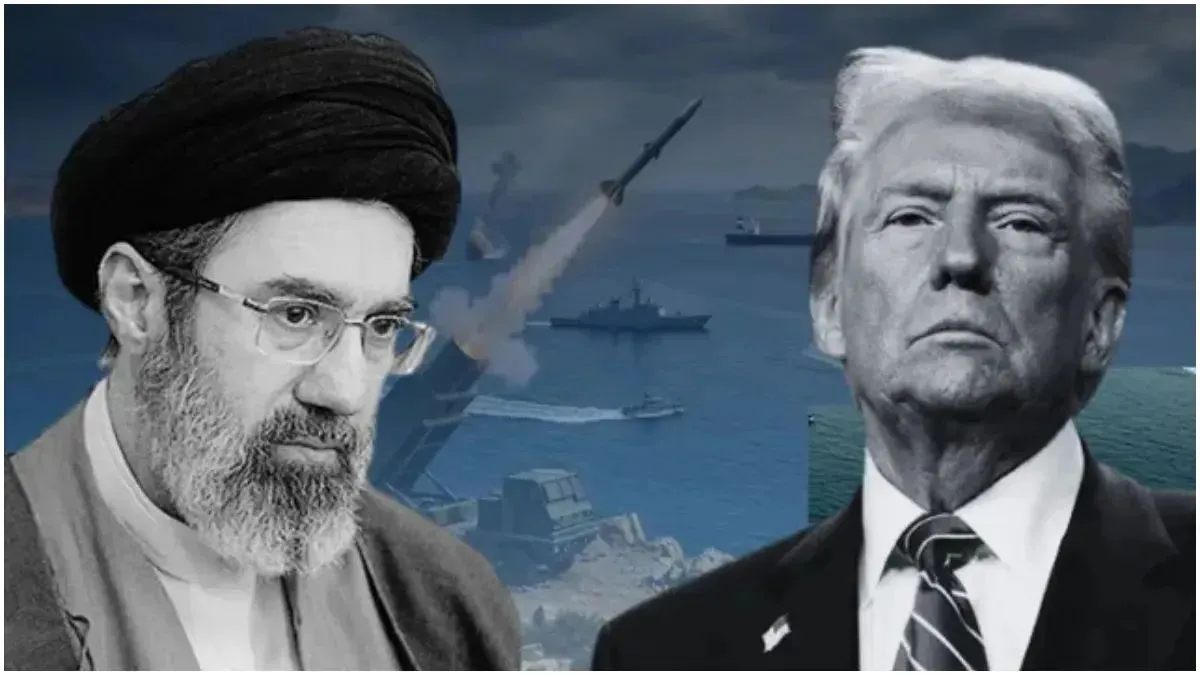
Following US-Iran talks fallout, United States President Donald Trump indicated a sharp escalation amid the ongoing conflict, suggesting the possibility of aggressive military strikes and economic pressure on Tehran. The development came shortly after JD Vance confirmed that the talks had failed to produce any agreement. Trump clarified his position on Truth Social by sharing an article outlining potential US responses, including military action and strategies to taking full control of Strait of Hormuz.
“If Iran refuses to accept the final deal the United States offered Saturday, Trump could bomb Tehran back to the “Stone Ages" as he vowed. Or he might just reprise his successful blockade strategy to choke an already teetering Iranian economy and ratchet up diplomatic pressure on China and India by cutting them off one of their key sources of oil,” Trump posted an article from the website ‘Just the News’ on Truth Social.
“It would be very easy for the US Navy to exert complete control over what does and does not go up and down the Strait now," Lexington Institute’s national security expert Rebecca Grant was quoted as saying by the outlet.
ALSO READ: Why 21 Hours Of US-Iran Talks Ended In Total Collapse: What’s Next?
Why Did US-Iran Talks Fail?
After a session of negotiations between the US and Iran in Pakistan that lasted about 21 hours, US VP JD Vance left for the United States as the stalemate persists between the two parties. US Vice President JD Vance confirmed that his negotiating team was leaving Pakistan after failing to reach a deal with Iran following 21 hours of talks, putting a fragile two-week ceasefire at risk.
“The bad news is that we have not reached an agreement, and I think that's bad news for Iran much more than bad news for the United States of America,” Vance said after the talks ended.
“So we go back to the United States having not come to an agreement. We've made very clear what our red lines are.”
D Vance said Iranian negotiators refused to accept US terms he described as “quite flexible", adding that Tehran had not committed to forgoing a nuclear weapon.
ALSO READ: From Mojtaba Khamenei To Pezeshkian: 6 Leaders Driving Iran's Strategy Amid Failed Talks With US
Vance underlined that while the US made it clear what its red lines were and the issues it was willing to accommodate, Iran, however, "chose not to accept our terms".
Both sides held firm on key issues such as nuclear policy, sanctions relief, and regional security, with no middle ground emerging. When asked by Nic Robertson of CNN in Islamabad what terms Iran rejected, Vance said, “The simple fact is we need to see an affirmative commitment that they will not seek a nuclear weapon and they will not seek the tools that would enable them to quickly achieve a nuclear weapon."