
- By A Bharat Bhushan Babu
- Thu, 26 Mar 2026 12:36 PM (IST)
- Source:JNM
March 21 is an important day in the Iranian calendar, marking the Norouz festival. It is the first day of Iranian New Year coinciding with the Spring equinox in the northern hemisphere. The annual festival that traditionally lasts 13 days has been celebrated in the ancient land of Persia for 3000 years since the days of Achaemenid empire from 550BC. It is one of the few cultural elements of the pre-Islamic Iran that survived to this day, overcoming attempts of some hardline Islamists to ban it as un-Islamic after the 1979 revolution but backed down due to its overwhelming popularity. This festival echoes the traditional Indian new year celebrations in various states as Ugadi, Gudi Padava or Chaitra Navaratri, symbolising the age old ties between these two great civilisations.
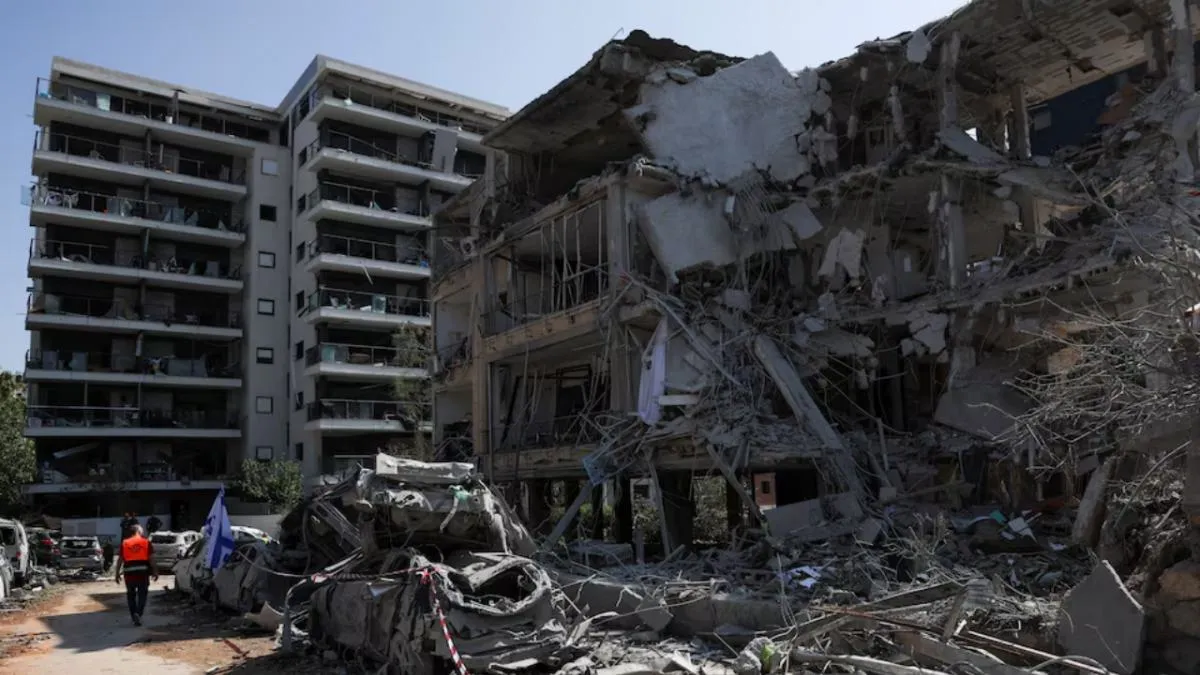
But this year’s New Year celebrations are anything but fun-filled as Iran experienced large scale destruction since the war erupted on February 28. And they resembled much more the spirit of Ashura, when Iranians mourn the martyrdom of Imam Hussain and his 72 companions in 680 AD in Karbala. Once again it is the spirit of Iranians to endure pain, yet stand tall that is on display.
ALSO READ: Jagran Opinion: West Asia's Sectarian Fault Line
There is no doubt that the world's most advanced missile batteries and combined air power of US and Israel are pulverising Iranian military and economic targets with impunity overcoming the Iranian air defence. They are able to hit targets all over the country including the nuclear facilities in Fordow, Natanz and Isfahan, Naval facilities in Bandar Abbas and Konarak and oil and gas installations in Tehran, Kharg island and the South Pars gas field (the world's largest offshore facility which Iran shares with Qatar, called North Dome) apart from taking out the top leadership of the Islamic Republic – the Supreme Leader Ali Khamanei, Defence Minister and several IRGC commanders. Keeping up its warning, Israel eliminated Supreme National Security Council Secretary Ali Larijani, Basij commander Gholam Reza Soleimani and Intelligence minister Esmail Khatib through airstrikes on March 17 and 18.
In the face of such ferocious attacks, many other countries would have capitulated quickly but not Iran. Its missiles continue to target Israel and some even managed to pierce through its multi-layered air defence mechanisms (Iron Dome, David Sling and Arrow system). Damage caused by these missiles to life and property is minimal but their psychological impact is significant that Iran still retains missile capability to retaliate and strike at targets in distant Israel.
But most of Iran’s missile and drone fury is directed at the soft targets in the neighbouring countries in the Gulf – oil and gas installations in Saudi Arabia (Ras Tanura refinery, SAMREF refinery in Yanbu), UAE (Fujairah oil industry hub, Shah oil and gas field, Habshan and Bab oil and gas fields and Dubai airport), Qatar (Liquified Natural Gas facility at Ras Laffan from where India imports roughly 40 per cent of its LNG shipments, Mesaieed industrial complex and Pearl Gas-to-Liquid facility), Bahrain (Bapco refinery, US military facilities at Juffair and Mina port) and Kuwait (Mina al Ahmadi refinery, Mina Abdullah refinery, US military facility at port Shuaiba). Significantly in kuwait attacks, six US servicemen have lost their lives, and also iran managed to hit US radar facilities in Qatar, UAE and Bahrain.
After three weeks of war, the following conclusions can be drawn:
- US and Israel have succeeded in decapitation of Iran’s top political and military leadership, but could not alter the regime's stranglehold on Iran. The battle-hardened old guard of the eight year war with Iraq (1979-89) are yielding space to the younger and probably more radical elements. Whether targeted killings by Israel will leave a leadership vacuum in Iran or make it more radical has to be seen. Either way after-war talks would be difficult.
- US and Israel have likely degraded the nuclear capabilities of Iran and put its navy out of function but its military capabilities – particularly the drones, missiles and launching pads that are causing huge anxiety to the GCC countries are still functional. Not only that, new long range missiles that are capable of reaching targets at 4,000 km (ex Diego Garcia) are unleashed.
- Dissonance between Israel and US is apparent when President Trump opposed Israel targeting Iran’s South Pars oil and gas field. Netanyahu agreed to fall in line but it is clear that Israel has not shared its complete war plans with the US. Also in retaliation Iran targeted oil and gas facilities in GCC countries. If these destructions result in further rise of crude oil prices, it will have a destabilising effect on the economies of several countries dependent on energy imports from this region. In fact all these countries should put pressure on Israel and Iran to end the war or at least put some rules of engagement in place exempting the oil and gas facilities from their attacks considering them as humanity’s shared resources.
- US also failed to enlist its NATO allies to join the war, even after President Trump expressly made a request to them to assist in the opening of the Strait of Hormuz. Except UK which allowed limited use of its military bases by US forces, no other European ally has stepped forward. Though Iran cleverly changed its language and now says the Hormuz Strait is closed only for hostile countries.
- Iran succeeded in regionalising the war by continuing its attacks on GCC countries and exposed the limitations of US military bases in these countries in providing foolproof security to them. Also these attacks further deepened fissures between the Sunnis and the Shias.
- The voice of United Nations, the global body established to maintain peace, prevent/resolve military conflicts, remained muted during this conflict. Barring a UNSC resolution (2817) that condemned Iran’s attacks on Gulf States and Jordan, there has been no active lobbying by its Secretary General Antonio Guterres in mobilising support of world powers for an immediate ceasefire and resumption of dialogue.
- Oman is in contact with Iran and US and proposed a 3-stage peace plan beginning with a 72-hour ceasefire. But Iranian foreign Minister Abbas Araghchi demanded a complete lifting of sanctions on Iran while US maintained that Tehran should give up its nuclear ambitions and dismantle the ballistic missile program.
As of now prospects of peace appear bleak but we live on hope. After 1961, this year again Nouruz and Eid Al Fitr were celebrated on the same day, i.e; March 20. Can this rare alignment of planets put an early end to the war and bring real cheer to people of the region and the world at large?
(Note: The writer is a retired IIS officer of 1991 batch, who had served in the Middle East for seven years. The views expressed are his own)