- By Harsh V Pant
- Mon, 13 Apr 2026 11:39 AM (IST)
- Source:JND
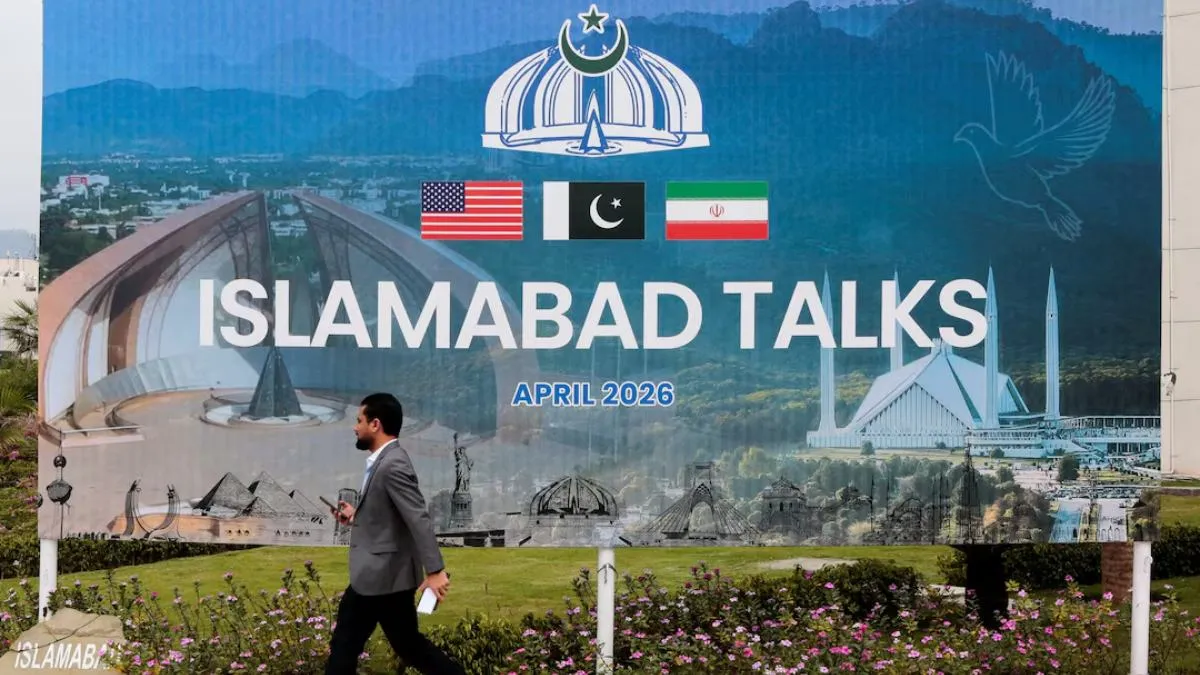
The collapse of US-Iran talks in Islamabad is less a case of diplomatic mismanagement and more an illustration of the structural rigidity that continues to define relations between the two nations. Despite the optics of high-level engagement, featuring senior leadership on both sides, including JD Vance, the negotiations were weighed down by maximalist demands, deep-seated mistrust, and incompatible strategic worldviews. What unfolded in Islamabad was not a failure of process, but a predictable outcome of entrenched positions that neither side appears willing, or perhaps able, to recalibrate.
At the core of the impasse lies the enduring dispute over Iran’s nuclear program. For Washington, the benchmark for any agreement remains absolute clarity: Iran must forgo not only the pursuit of nuclear weapons but also the technical capacity that would allow it to rapidly assemble one. This translates into demands for zero uranium enrichment and the dismantling or neutralization of existing stockpiles of highly enriched uranium. In strategic terms, this reflects an American preference for permanent denial over temporary restraint. However, from Tehran’s perspective, such demands amount to a negation of sovereignty. Iran’s leadership has consistently framed its nuclear program as a symbol of technological self-reliance and national dignity. To concede on enrichment is not merely to compromise on policy, it is to capitulate on principle. This fundamental divergence transforms the nuclear issue from a negotiable technical matter into an existential political fault line.
Compounding this difficulty is the disagreement over the scope and ambition of the proposed agreement. The United States approached the talks with a limited objective: to stabilize an increasingly volatile situation through targeted measures such as nuclear restrictions and the reopening of critical maritime routes, particularly the Strait of Hormuz. Iran, however, came to the table with a far more expansive agenda. It sought not just de-escalation but a comprehensive recalibration of its relationship with the West, encompassing sanctions relief, access to frozen financial assets, compensation for damages incurred during recent military strikes, and a broader regional ceasefire that would include Israeli operations against allied groups such as Hezbollah. This mismatch in negotiating frameworks ensured that even preliminary consensus remained out of reach. Where Washington saw a crisis to be contained, Tehran saw an opportunity to renegotiate the terms of engagement altogether.
The Strait of Hormuz emerged as a particularly revealing point of contention. For the United States and its allies, ensuring the uninterrupted flow of energy supplies through this vital chokepoint is a strategic imperative. Consequently, Washington pushed for its immediate reopening as a standalone confidence-building measure. Iran’s refusal to comply without a broader agreement underscores its strategic calculus. By leveraging its geographic position, Tehran has sought to offset its relative military and economic disadvantages. The implicit message is clear: any discussion of regional stability must account for Iran’s interests in totality, not in isolation. In this sense, the Strait becomes not just a logistical concern but a bargaining chip embedded within a larger geopolitical contest.
The mutual recriminations that followed the breakdown are emblematic of a deeper malaise. American officials characterized Iran’s proposals as insufficient and lacking seriousness, while Iranian representatives accused Washington of advancing excessive and unlawful demands without genuine intent to negotiate. These accusations are not merely rhetorical: they reflect a pattern that has defined previous rounds of engagement, including the failed Oman-mediated talks of 2025 and early 2026. In each instance, diplomacy has been undermined by a persistent suspicion that the other side is negotiating in bad faith, either to buy time or to extract unilateral concessions. This erosion of trust has rendered even well-intentioned initiatives vulnerable to collapse.
What makes the current moment particularly precarious is the broader strategic context. Iran enters this phase under significant strain. The cumulative impact of recent conflicts, including strikes by the United States and Israel, has degraded elements of its military infrastructure. Domestically, the regime continues to grapple with economic hardship, public dissatisfaction, and the destabilizing effects of prolonged sanctions. Yet, despite these vulnerabilities, Iran retains critical sources of leverage. Its residual nuclear expertise, its network of regional proxies, and its capacity to disrupt key maritime routes ensure that it cannot be easily coerced into submission. This asymmetry, weakness in some domains, strength in others, complicates any straightforward application of pressure.
The immediate consequences of the breakdown are likely to be both serious and far-reaching. The fragile ceasefire, already limited in scope and duration, now appears increasingly untenable. In the absence of a renewed diplomatic framework, the risk of escalation rises sharply. The United States has previously signalled its willingness to intensify military action should Iran fail to meet its demands, potentially targeting critical infrastructure. Iran, in turn, possesses multiple avenues for retaliation, ranging from the activation of proxy networks to direct actions affecting maritime security. The prospect of renewed confrontation is not hypothetical: it is very much a near-term possibility.
The economic implications are equally concerning. The Strait of Hormuz remains one of the world’s most critical energy arteries, and any disruption to its operation would have immediate global repercussions. Oil prices would likely surge, shipping costs would increase, and inflationary pressures could intensify across major economies. In an already fragile global economic environment, such shocks could have cascading effects, amplifying uncertainty and undermining recovery efforts.
ALSO READ: Oil Prices Surge Past $100 As Trump Threatens Hormuz Blockade After US-Iran Talks Collapse
Internally, the breakdown may also shape Iran’s political and strategic trajectory. The absence of sanctions relief will exacerbate existing economic challenges, further straining the regime’s capacity to maintain domestic stability. At the same time, the failure of diplomacy provides hardline elements within Iran with a powerful narrative: that engagement with the West yields little tangible benefit. This could accelerate shifts toward a more confrontational posture, including potential advancements in nuclear capabilities and reduced cooperation with international monitoring mechanisms.
Regionally, the ripple effects are likely to be significant. Proxy conflicts could intensify, drawing in multiple actors and expanding the geographic scope of instability. The possibility of miscalculation increases in such an environment, particularly when communication channels are weak and trust is minimal. Even in the absence of full-scale war, a sustained period of low-intensity conflict would carry substantial risks.
In the longer term, the failure of talks in Islamabad reinforces a broader pattern: the diminishing returns of diplomacy in the absence of strategic flexibility. For Iran, the episode will likely deepen scepticism toward Western intentions, reinforcing a narrative of betrayal and inconsistency. For the United States, it highlights the limitations of a coercion-heavy approach that leaves little room for compromise. The result is a narrowing diplomatic space at precisely the moment when engagement is most needed.
Ultimately, the breakdown of these talks underscores a sobering reality. The US-Iran conflict is not simply a dispute over policy specifics; it is a manifestation of deeper geopolitical and ideological divides. Until there is a willingness on both sides to reassess core assumptions and explore genuinely reciprocal frameworks, such negotiations will continue to falter. In this sense, Islamabad is not an aberration-it is a continuation of a long-standing pattern where diplomacy struggles to keep pace with the structural forces driving confrontation.
(The writer is the Vice President at the Observer Research Foundation. Views expressed are personal.)