
- By Shubham Bajpai
- Mon, 13 Apr 2026 03:54 PM (IST)
- Source:JND
Uttar Pradesh's primary industrial and IT hub, Noida, on Monday saw a large-scale violent protest by factory workers over low wages and unmet demands for salary hikes.
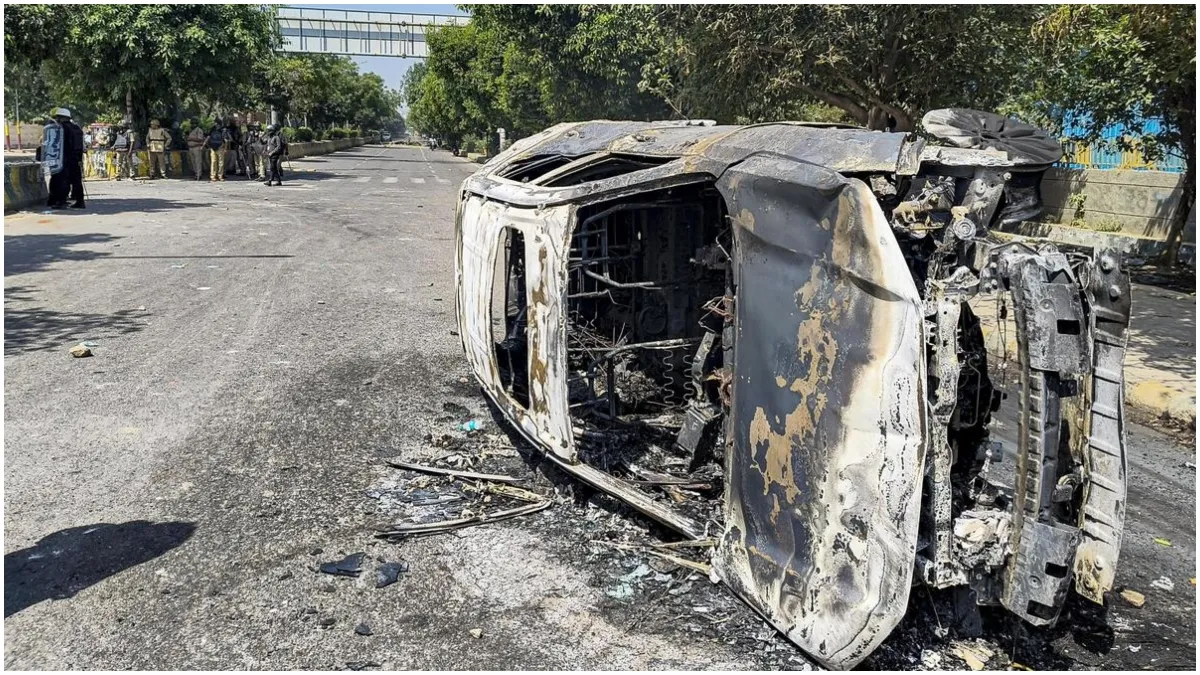
The agitating employees vandalised and torched vehicles, damaged property, and allegedly pelted stones at police personnel in the Phase 2 industrial area.
The protest also caused massive traffic congestion on key roads connecting Ghaziabad, Noida, Greater Noida and Delhi.
Long queues were reported on the Noida Link Road, Chilla Border, severely affecting vehicular movement from Delhi towards Noida and Greater Noida.
What did protesting workers say?
News agency IANS talked to several workers on site who shared their grievances, with the primary concern being the growing gap between wages and living expenses.
One of the protesters said that he has been working for five years in the same company, yet his monthly salary remains around Rs 12,000.
"When we ask for a raise, we are threatened and told to leave the job," he claimed.
Another worker expressed displeasure over the rising cost of living, questioning how low-income earners are expected to survive.
"Those earning Rs 50,000 buy cooking oil at Rs 200 per kg, and we also have to buy it at the same rate. Is there a separate market for us?" he lamented.
The worker added that he spends nearly Rs 5,000 on room rent alone, and so the salaries should be increased.
The agitating workers also expressed concern over the rising housing costs in the city. "Every year, the rent increases for the rooms, but our salaries do not. How are we supposed to pay?" one protester was quoted as saying by IANS.
The majority of the protestors anxiously voiced difficulties in managing expenses like rent, ration and children's education.
ALSO READ: In Pics: Noida Workers Hit Streets To Protest For Pay Hikes, Bonus, And More
A demand for a minimum monthly salary of Rs 20,000 to Rs 25,000 was also made by several protestors. A female worker said that her base salary is Rs 12,000, and gets increased to Rs 14,000-Rs 15,000 only after overtime.
"Even then, it is not enough to sustain. Our salary should be at least Rs 20,000-Rs 25,000," she said.
Workers also raised concerns over overtime compensation.
A group of workers collectively raised their pay and demanded double overtime. "We should be given double overtime. Many of us have been working in TV manufacturing units for over five to six years, yet our salary is still just Rs 12,000," the group said.